
Gaydoo
TouchChatSocial
3.8632.00 Reviews
- Version
- 3.1.0
- Installs
- 100.00K
- Age Rating
- Mature 17+
Screenshots

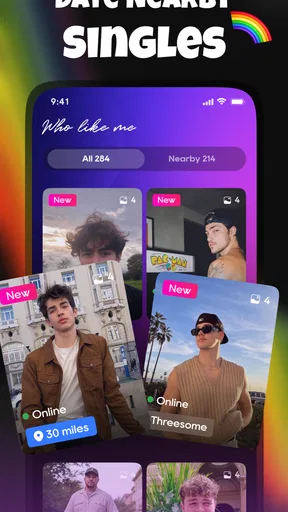


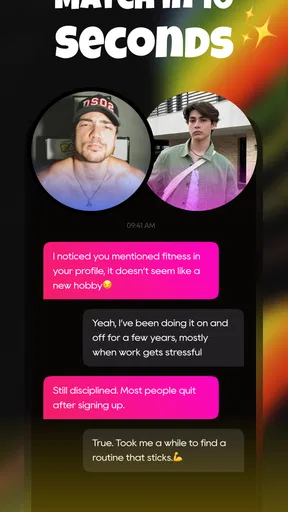
Our Review of Gaydoo
 Analysis by Appyee
I approached Gaydoo as a social app for adults rather than something that belongs on a shared family tablet. Its purpose is straightforward: helping gay men meet people nearby. That makes it potentially useful in a very specific situation, but it also creates boundaries that matter more than they would with a general chat or community app. In my experience, the main question is not simply whether it can help you find local connections. It is whether you can use it on your own device, with your own account, and with enough privacy and judgment to keep personal conversations separate from household use.
The app is free to install, although purchases inside it range from $9.99 to $99.99 for each item. It is listed for mature users aged 17 and over, and TouchChat is the developer. That combination immediately sets the right expectation: this is not a casual social network for children, relatives, or a device that everyone in the home opens freely. I would treat it as a personal dating and meeting tool, even though its store category is Social.
How Gaydoo fits into everyday shared-device life
I find that using Gaydoo on a shared device raises a different question from simply keeping a profile private: how do you make sure the next person who picks up the device is not drawn into your account by accident? I would build a small handoff routine around signing out or closing the session and checking what remains visible, then consider how that routine fits the household’s everyday use of the device.
A personal app in a household setting
Imagine a realistic household scenario: two partners share a tablet, or a family keeps one Android phone in the kitchen for general browsing. Someone installs Gaydoo because they want to meet real guys nearby, then leaves the device logged in. That arrangement is uncomfortable from the start. Nearby profiles, private conversations, and account activity can become visible to another person simply because the screen is shared. Even if nobody intends to snoop, notifications or an open conversation can create an awkward moment.
I would use this app only on a device that belongs to me or is clearly assigned to my account. A shared device can work for many social tools, but Gaydoo involves personal identity and potentially intimate conversations. The sensible workflow is to keep the account on a private phone, avoid leaving the app open, and treat the device itself as part of the privacy boundary. This is more important than whether the app feels easy to navigate.
For couples or housemates, the issue is not necessarily secrecy. It is account separation. Each person should know which account is active, and nobody should assume that switching profiles inside the app is enough to protect the previous user. I would also avoid using a shared email inbox or a common device passcode for an account connected to local meetups. Those habits blur responsibility and make it harder to tell who is receiving a message or changing a conversation.
What the local focus changes
The nearby-meeting angle makes Gaydoo more immediate than a broad online community. A distant conversation can remain a conversation; a local connection may quickly turn into a plan to meet in person. That can be a strength when you want to move beyond endless messaging, but it also means I would slow down before sharing an address, workplace, regular route, or details that reveal where I live.
A useful approach is to separate discovery from coordination. I would use the app to see whether there are people I might genuinely want to talk with, then keep early messages general. If a conversation becomes promising, I would agree on a public location rather than inviting someone directly to my home. The app may make meeting nearby feel convenient, but convenience should not decide the safety of the first meeting.
Who will get the most from it
Gaydoo makes the most sense for an adult gay man who wants local social or dating possibilities and is comfortable starting conversations with people he does not already know. It may be especially appealing if conventional social circles feel limited, or if you want a more direct way to discover people in your area instead of waiting for an introduction through friends.
I would be less enthusiastic about it for someone seeking a large interest-based community, long-form discussion, or a carefully organized group experience. A general social network may be better for following shared interests, while a messaging service is usually better for coordinating with people you already trust. Gaydoo’s value comes from the local discovery context, so it is not automatically the best replacement for every social app.
Setting up without mixing identities
The first setup decision should be which identity you want to use. If you are testing the app, I would create a profile that feels authentic without exposing information that can identify your home or daily routine. A photo can show personality, but I would inspect the background carefully. Street signs, school logos, workplace badges, house numbers, and recognizable views can reveal more than intended.
I would also decide in advance how much of my real name, job, and location I am comfortable discussing. Local discovery already narrows the field, so adding several identifying details at once can make it surprisingly easy for a stranger to work out who you are. The best profile is not the one that says everything immediately. It is the one that gives a genuine impression while leaving room to build trust gradually.
Because the app is free to install but includes paid items, I would also avoid buying anything during the first few minutes. First learn whether the basic experience suits your goals, whether the nearby audience feels relevant, and whether conversations are worth continuing. A purchase can improve access or convenience in some apps, but it cannot make an unhelpful match more compatible or turn an unsafe conversation into a safe one.
Account boundaries that are easy to overlook
On a household device, I would make three boundaries explicit. First, the account belongs to one person and should not be casually handed to another. Second, the app should not be treated as a family browsing space. Third, conversations should not be copied into shared notes, shared photo areas, or a household messaging thread unless everyone involved understands what is being exposed.
These boundaries are useful even when there is nothing secret about using the app. Personal conversations deserve context. A partner may know that you use Gaydoo, but that does not mean every message should appear on a communal screen. Likewise, a housemate might be comfortable sharing a tablet for recipes and streaming, but that does not make the tablet appropriate for private local dating conversations.
My practical advice is to finish each session deliberately. Close the conversation view, return to a neutral screen, and check whether the device is likely to show a preview to the next person who picks it up. I would not rely on a household rule such as “please do not open my apps.” Good privacy design starts with reducing accidental exposure, not merely expecting perfect behavior from everyone else.
Using Gaydoo to coordinate a real meeting
Coordination is where the app’s local purpose becomes most useful. Once a conversation feels genuine, I would keep the plan simple: agree on a public place, choose a time when other people are around, and make sure I can leave independently. I prefer a plan that does not require a stranger to know my address, daily schedule, or transport details.
A small but important tip is to confirm the plan shortly before leaving rather than assuming that an old message still reflects the arrangement. People misunderstand times, locations, and expectations. A clear confirmation also gives you a natural opportunity to notice whether the other person respects ordinary boundaries. If someone reacts badly to a public meeting place or pressures you to move immediately to a private location, I would treat that as useful information and cancel.
For household coordination, I would tell one trusted person where I am going without forwarding the entire conversation. Sharing the basic plan preserves some privacy while still creating a safety check. If you live with a partner or family member, that can be as simple as saying which public place you chose and when you expect to return. The goal is not to turn a date into a supervised event; it is to avoid disappearing without anyone knowing your general plan.
I would also keep the first meeting separate from household routines. Do not arrange for a new contact to arrive while children are present, while a vulnerable housemate is alone, or when you are responsible for someone who cannot easily leave the situation. A local social app can fit into a busy home life, but only when the meeting does not create an avoidable risk for other people in the household.
Trust has to develop outside the profile
A polished profile is only a starting point. I pay more attention to whether a person answers consistently, respects a slower pace, and accepts ordinary questions without becoming defensive. I would be cautious with anyone who immediately asks for money, pushes me to move to another service, insists on secrecy, or wants personal details before offering basic information about themselves.
This is also where Gaydoo differs from meeting through an established friend group. In a friend-of-a-friend situation, there may be some shared context. With a nearby stranger found through an app, you should assume that context has not been independently checked. That does not mean every user is suspicious; it means trust should be earned through behavior rather than inferred from proximity or a friendly photo.
One non-obvious trade-off of local discovery is that familiarity can be misleading. Seeing the same neighborhood, workplace area, or venue in a profile may create a false sense that you already know the person. In reality, geographic closeness only tells you that you may cross paths. I would keep the same caution for a nearby contact as I would for someone from a different city.
Age context and the mature audience
The mature 17+ rating should shape how the app is handled at home. I would not install it on a child’s device, leave it available on a family tablet, or assume that a younger household member will understand the context of local adult-oriented conversations. The rating is not a substitute for supervision or conversation, but it is a clear reminder that this app is intended for an older audience.
Adults in a shared home should be direct about device ownership and access. If a teenager uses the same phone occasionally, Gaydoo should not remain signed in where its profiles or messages can appear unexpectedly. If a family needs a common device, I would choose a separate personal phone for this kind of app rather than trying to make one screen serve incompatible purposes.
The same principle applies to visitors. A friend borrowing your phone to make a call should not be placed in a position where private notifications appear. I would review notification behavior at the operating-system level and consider whether previews are appropriate on the lock screen. I am not treating that as a special Gaydoo feature; it is simply a sensible device habit when an app involves private local conversations.
Performance expectations and the current build
Gaydoo reached the store on May 23, 2024, and the current version is 3.1.0. That places it in a relatively recent stage of its public life, so I would approach it as an app that may continue to change rather than as a completely settled social platform. The Android requirement is version 6.0 or newer, which makes it accessible to many older devices, although the experience will still depend on the phone and the quality of its connection.
The app has passed 100K installs, with an average rating of 3.8 from around 2.2K ratings and 632 reviews. I read that as moderate interest rather than a guarantee of a consistently strong experience. The audience is large enough to make the concept worth trying, but not so established that I would assume every area has the same depth of local activity. A person in one city may find the nearby focus useful, while someone elsewhere may encounter fewer relevant conversations.
That geographic variation is one reason I would test the free experience before spending money. If local availability is the main reason you installed it, the quality of your own area matters more than the overall install count. I would judge the app by whether it helps me have respectful, relevant conversations, not by how impressive its download figure sounds.
How it compares with familiar alternatives
Compared with a broad social network, Gaydoo is more focused on meeting nearby men and less suited to maintaining a mixed circle of relatives, coworkers, and old friends. A general network may offer stronger identity continuity, but its audience is not organized around the same local dating purpose. Using both can make sense: one for existing relationships and one for discovering new ones.
Compared with a standard messaging app, Gaydoo is useful earlier in the process. Messaging apps are excellent once you know who you want to contact, but they do not usually solve the discovery problem. I would not replace a trusted messenger entirely; I would use it only after deciding that moving a conversation elsewhere is sensible and after checking that the person respects boundaries.
Compared with a larger, more established dating service, Gaydoo’s appeal is its direct simplicity and local emphasis. The trade-off is that a smaller or newer service may feel less predictable from one location to another. If you want extensive filtering, a long history of community moderation, or a very large pool of profiles, another dating platform may be a better fit. If you prefer a focused way to see who may be nearby, this app deserves a fair trial.
Who should skip it
I would skip Gaydoo if you are looking for a private journal, a family-friendly community, or a tool for coordinating an existing group. It is also not the right choice if you are uncomfortable with local discovery or do not want the possibility of turning an online conversation into an in-person meeting. A broader community app will be less direct, but that may be exactly what you want.
I would also advise against it for anyone who plans to use a shared device without clear account separation. The problem is not that shared devices are always unsafe; it is that this particular use case makes accidental exposure more consequential. If you cannot keep your profile and conversations personal, the app’s central benefit is not worth the household friction.
My household verdict
Gaydoo is a focused social app for adults who want to meet gay men nearby, and I can see its value when used with a private device, realistic expectations, and a patient approach to trust. Its free entry makes testing straightforward, while the paid items mean I would postpone spending until I know that local activity and conversation quality justify it.
My strongest recommendation is to treat it as a personal dating tool, not as a harmless shared social app. Keep the account separate, avoid revealing household details too early, coordinate first meetings in public, and make sure other people in the home are not exposed to private notifications or conversations. Those habits do more for the experience than rushing through setup or paying for extras.
For the right adult user, the nearby focus can make starting a connection feel more practical than using a general network. For a family tablet, a child-accessible phone, or anyone seeking broad community discussion, I would choose something else. Gaydoo works best when its local purpose is matched by equally clear personal boundaries.
Verdict
Strengths of Gaydoo
- Simple way to discover LGBTQ+ people and connect locally.
- Profile-based matching helps users find people with shared interests.
- Useful for making friends, dating, or expanding your social circle.
- Location features can help identify nearby community members.
- A niche LGBTQ+ focus may feel more welcoming than general dating apps.
Limitations of Gaydoo
- The number of active users may vary greatly by location.
- Some features may require registration or paid access.
- Location-based matching can raise privacy concerns for some users.
- Profiles and activity levels may be limited outside major cities.
- As with any social app, users should stay alert for fake profiles or scams.
Similar Picks in This Category
View All
Meta Platforms, Inc.4.6

Instagram4.0

Likee-Live, Chat & Party Games
Likeme Pte. Ltd.4.4

Facebook Lite
Meta Platforms, Inc.4.5

TikTok - Videos, Shop & LIVE
TikTok Pte. Ltd.4.0

Moj: Free Short Drama & Reels
ShareChat4.1
Frequently Asked Questions
What is Gaydoo and what can I use it for?
Gaydoo is a social and dating app designed to help gay, bisexual, queer, and LGBTQ+ users connect with people who share similar interests. After creating a profile, you can browse other members, exchange messages, and potentially arrange friendships, dates, or local meetups. Its usefulness depends on the number of active users in your area and how complete your profile is.
Is Gaydoo free to download and use?
Gaydoo can generally be downloaded without an upfront charge, but some features may depend on the app’s current membership model. Basic profile browsing or messaging may be available for free, while enhanced visibility, additional filters, or other premium tools could require payment. Before subscribing, review the in-app pricing, renewal terms, and cancellation options carefully.
Is Gaydoo safe and private for LGBTQ+ users?
Gaydoo may include standard privacy and account controls, but no social or dating platform can guarantee complete safety. Avoid sharing your home address, financial information, workplace details, or intimate content with strangers. Check the available blocking and reporting tools, use strong account credentials, and arrange first meetings in public places. Also review the privacy policy before uploading photos or personal information.
How do I create a profile and find people on Gaydoo?
After installing Gaydoo, you typically need to register an account and provide basic information such as a display name, age, location, interests, and profile photos. A clear and respectful profile usually improves the quality of interactions. Depending on the available features, you may be able to browse nearby members, apply preferences or filters, and start conversations with users who interest you.
What should I know before downloading Gaydoo?
Before downloading Gaydoo, check whether it is officially available in your country and confirm that your device meets the required Android or iOS version. You should also consider location permissions, notifications, data usage, and the amount of personal information requested during registration. User activity can vary significantly by region, so the experience may be better in larger LGBTQ+ communities than in smaller areas.
